
Palomar 6 Globular Cluster, Lagoon Nebula, Andromeda Galaxy
Posted: 15 October 2026
Wednesday, 7 October 2026, had clouds. Friday morning, 9 October, with rain from the remnants of Pacific Hurricane Rachel approaching, I put the Dome Cover ON. There was a nice sunset that evening.
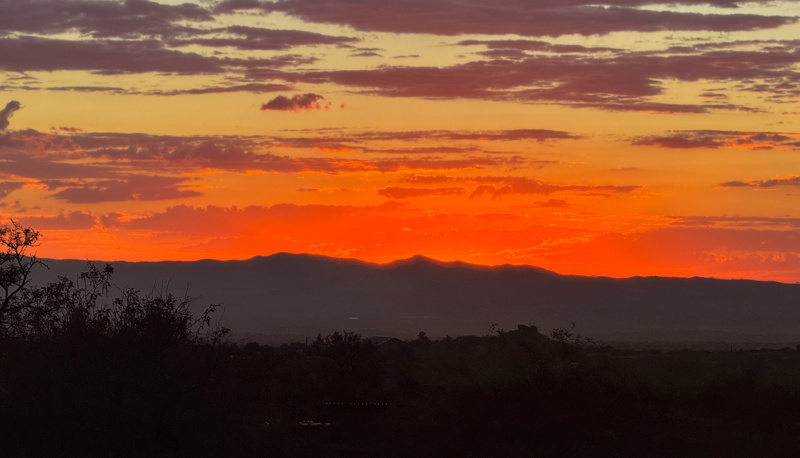
Saturday, 10 October, the rain (0.08") arrived but the heaviest rain stayed well west of Oracle. Late Monday night, 12 October, had some rain (0.09"), which continued (0.38") early Tuesday morning, 13 October. Had a brief thundershower late afternoon (another 0.39" in 10 minutes; seen below).
Click to view video
The sky finally cleared on Wednesday, 14 October.
|
Open: Wednesday, 14 October 2026, 1806 MST Temperature: 72°F |
Session: 2157 Conditions: Clear, humid |
Equipment:
12" f/8 LX600 w/StarLock
2" 24mm UWA eyepiece
2" 30mm eyepiece
1.25" 26mm eyepiece
Camera:
iPhone 15 Pro Max
D850 DSLR
1810 MST: Dome Cover OFF.
1818 MST: LX600 ON, StarLock OFF, High Precision OFF.
Viewed the Moon, low in the southwestern sky, 102X and 81X.
Attached the LiDAR Cover on the iPhone 15 Pro Max and mounted the phone on the 30mm eyepiece.iPhone afocal 81X image of the Moon taken with the Camera app (1X lens).
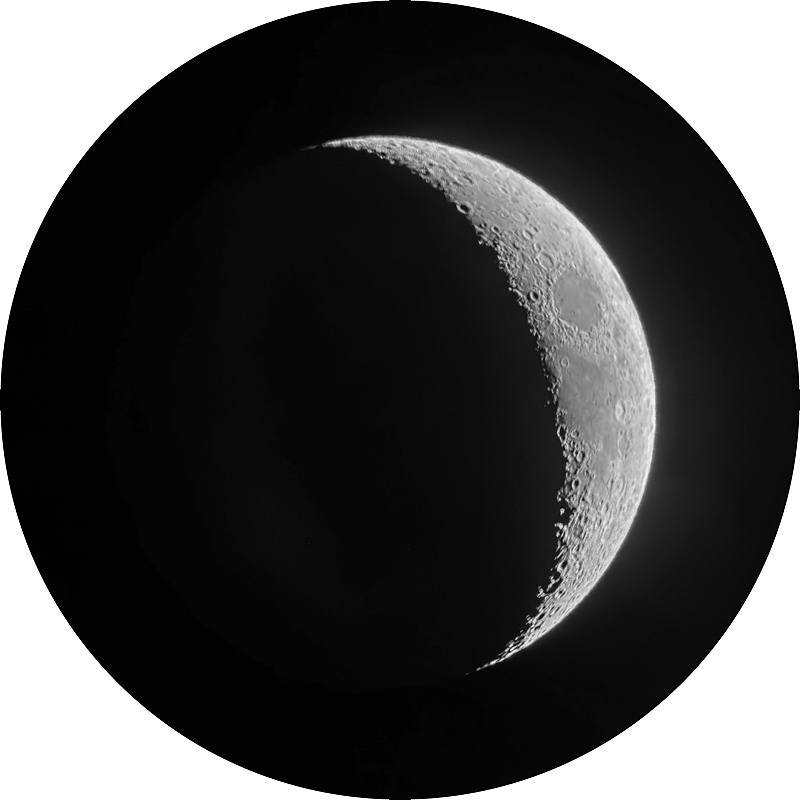
Did some Moon images as part of my beta testing of an iPhone camera app.
Prepared the D850 DLSR for imaging. Mounted the D850 at prime focus, SYNCed on Antares, locked the primary mirror.
I then did a MAJOR OOPS. I had meant to turn ON the power switch for the Wi-Fi adapter, but instead, turned OFF the power strip that the switch is plugged into. The power strip also controls power to other items in the observatory, including the telescope. I had to reset the DSLR camera (which was turned ON before the power oops) and do a star alignment for the telescope AutoStar. Since my first DSLR imaging target was already low in the southwestern sky, it became even lower while I did the realignment.
1924 MST: Wi-Fi ON.
Used SkySafari 7 Pro to GOTO Palomar 6 (globular cluster). By this time, the cluster was approaching tree limbs to the southwest of the observatory. I decided to try imaging anyway.
1932 MST: StarLock ON.
Took this StarLock autoguided image of Palomar 6 (globular cluster), 2 minutes, ISO 6400.
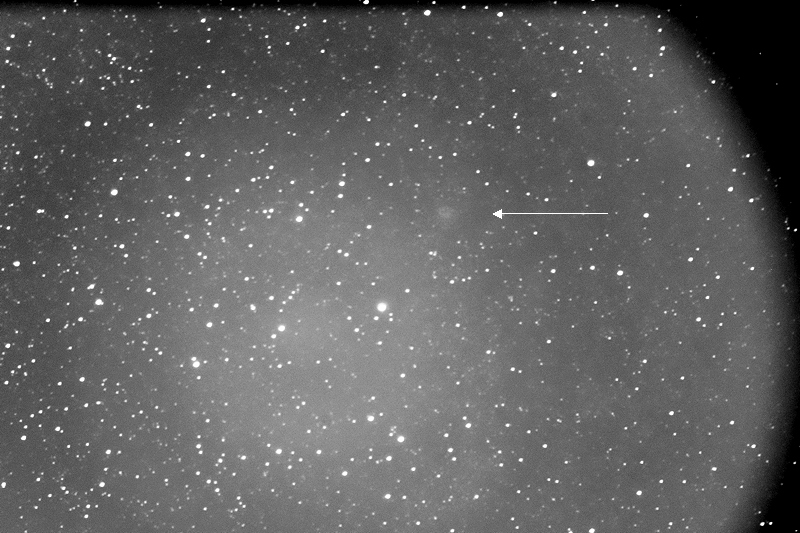
I had planned to try imaging a few more globular clusters that were low in the southwestern sky, but the Moon, skyglow from Catalina and Oro Valley, and deteriorating seeing ended my attempt.
1955 MST: Wi-Fi OFF.
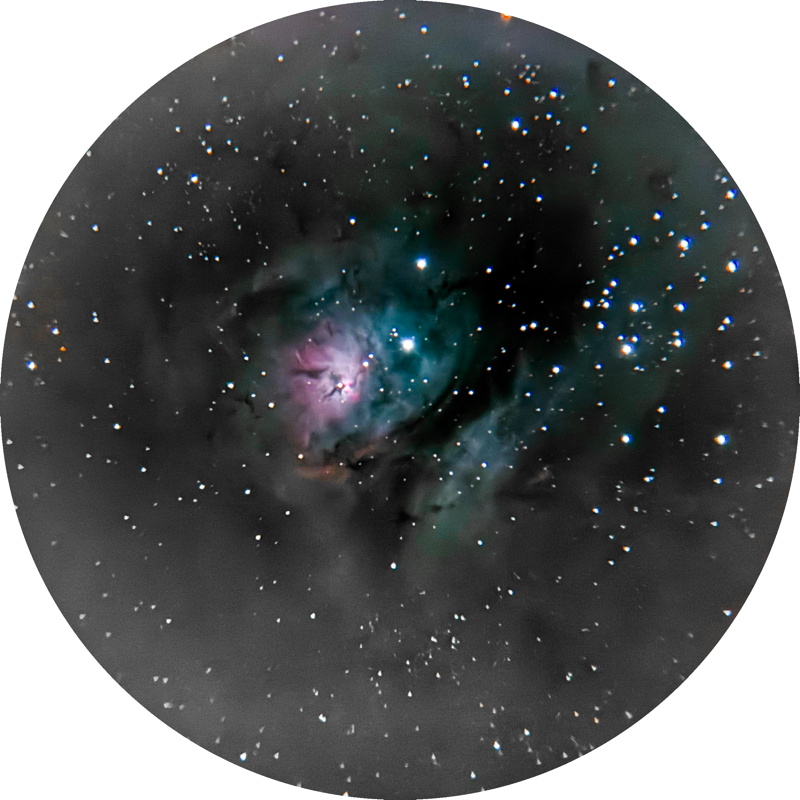
Viewed M8 (Lagoon Nebula), low in the southern sky, 102X and 94X.
Attached the LiDAR Cover on the phone and mounted the phone on the 26mm eyepiece. Took this StarLock autoguided afocal 94X image of M8 using the Camera app (Night Mode, 30 seconds, 1X lens).
I then did some more beta tests for camera app developer.
2017 MST: StarLock OFF.
Viewed Saturn, 102X.
2024 MST: LX600 OFF.
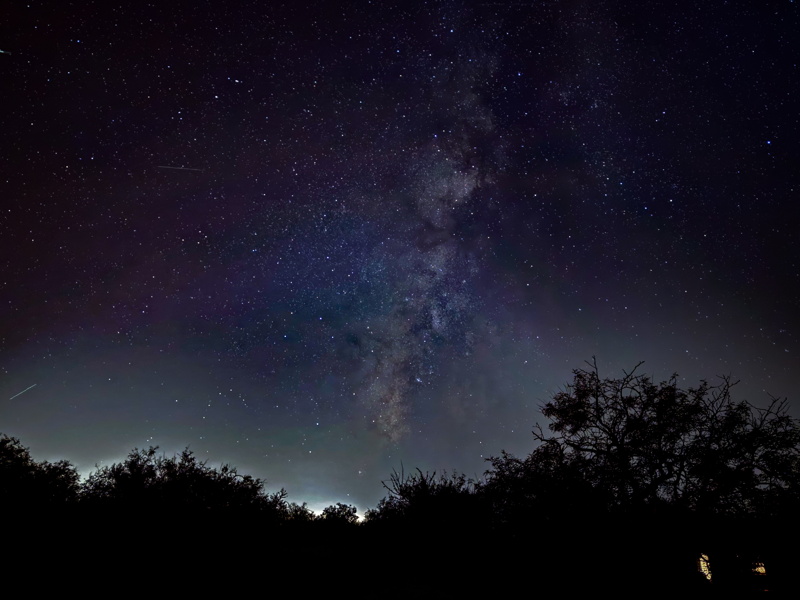
Removed the LiDAR Cover from the iPhone and mounted the photo on a camera tripod outside of the observatory. Took this photograph of the Milky Way using the Camera app (Night Mode, 30 seconds, 1X lens).
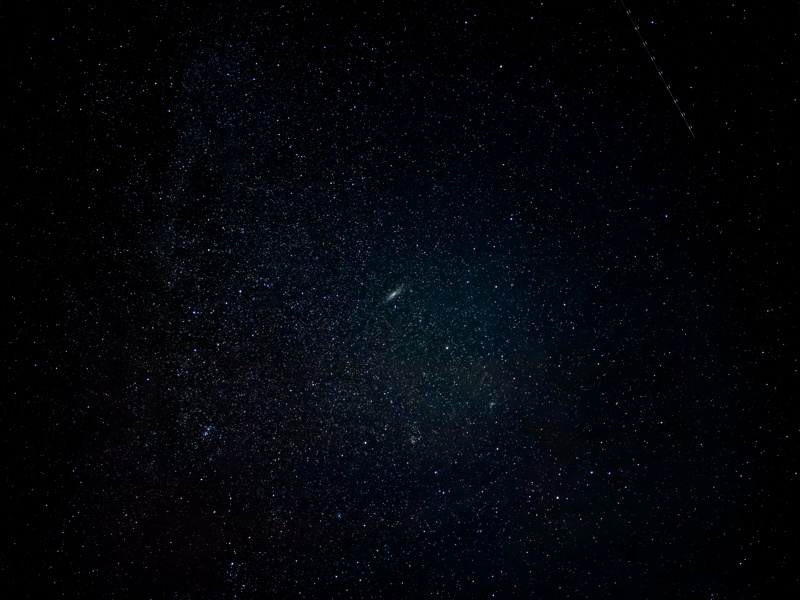
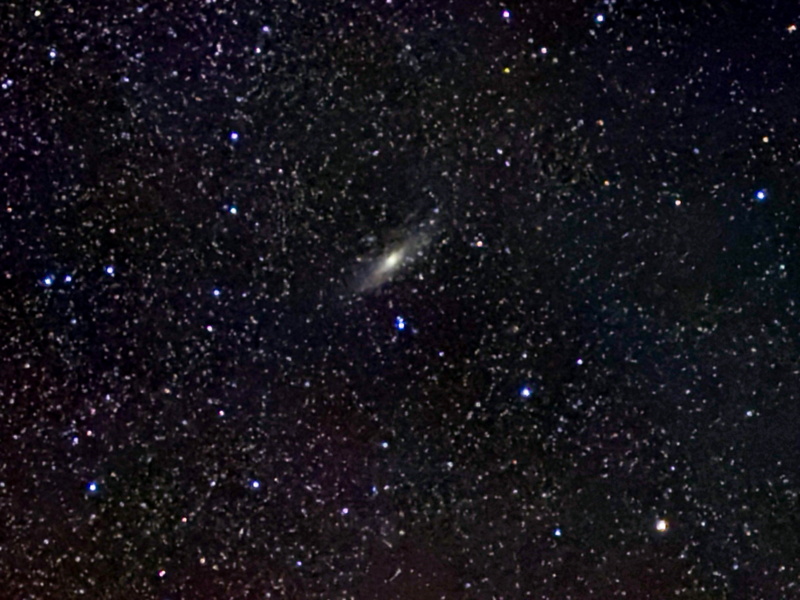
Took these photographs of M31 (Andromeda Galaxy) using the Camera app (Night Mode, 30 seconds, 1X lens and 5X lenses).
Did some more camera app beta testing.
2107 MST: Dome Cover ON. More rain the forecasts.
2112 MST: Took a Sky Quality reading.
One other frustration hit me during this session. The red LED on my headlamp would frequently turn off after a few seconds. The white LED did not experience this same problem, so the batteries are probably OK. Will have to do some troubleshooting and possibly get a replacement headlamp.
|
Close: Wednesday, 14 October 2026, 2115 MST Temperature: 52°F |
Session Length: 3h 09m Conditions: Clear, humid, SQM 20.83 |
Comments are welcome using Email. Please read the Email Etiquette guidance.
Cassiopeia Observatory Home Page

Copyright ©2026 Michael L. Weasner / mweasner@mac.com.
URL = http://www.weasner.com/co/Reports/2026/10/15/index.html